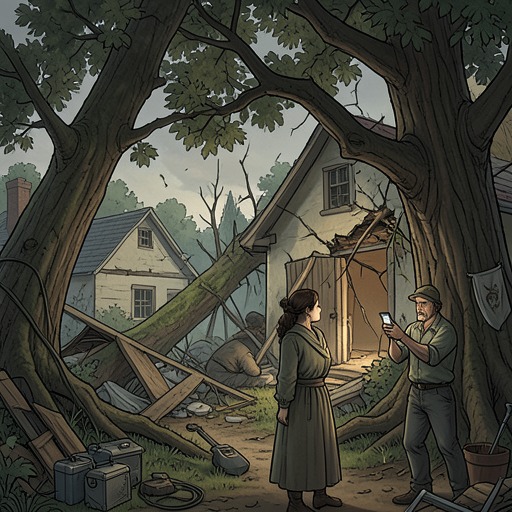
The backyard eucalyptus tree
Shrill: Notes from a Loud WomanThe backyard eucalyptus tree is both a physical cause of the destruction of the narrator’s small yellow house and an image bound to a period of upheaval. It fell during the Santa Ana winds, after Ahamefule J. Oluo had told the narrator he was leaving and shortly before her father died; the tree’s collapse made the loss of the home they had shared feel inseparable from the unraveling of their imagined future.
Setting and Circumstances
The tree stood behind the little yellow house the narrator had moved into with Ahamefule J. Oluo in a new state. The move had taken place eight weeks before the tree fell, with plans the narrator later describes as grand, though she had come to doubt them. By then, Ahamefule J. Oluo had told her he was leaving. The fall came four weeks after that conversation and two weeks before her father’s death, placing the storm’s damage within a compressed sequence of separation, relocation, and impending bereavement.
The narrator was alone in the bed she and Ahamefule J. Oluo had shared when the tree came down. In a separate account of the night, she describes the Santa Ana winds intensifying around the house while he was away. The sound of the storm seemed at first like a nightmare; she did not understand what had happened until morning.
The Fall and Its Aftermath
The old eucalyptus could not withstand the winds. It cracked in half and crushed the house. When the narrator entered the kitchen after waking, leaves covered the windows and sills, came through the screens, and filled the view through the back door and into another room. The familiar home had become difficult to see beneath the tree’s debris; someone then banged on the door, startling her.
The destruction was not merely damage to a building. The house had been the setting for the couple’s shared life, and the narrator had understood it as the place where their love story was meant to unfold. The tree’s fall abruptly altered that domestic setting, turning a home associated with a hoped-for future into a ruined one.
Symbolic Role
The narrator explicitly recognizes the collapse as a metaphor, while also resisting how neat it seems: the tree falls on the house that was supposed to hold the couple’s love story, at a moment when the relationship is already ending. She imagines that a fiction editor would reject such an obvious symbol. That self-consciousness is part of the tree’s significance: the event feels almost too perfectly arranged to be credible, yet it happened in the narrator’s life.
The tree therefore joins material consequence to retrospective meaning without replacing one with the other. Its fall destroys the house, while its timing gathers the breakup, the move, and the approaching death of the narrator’s father into a single image of instability. The story does not present the tree as an omen or a cause of those losses; its force comes from the way an actual storm damage becomes legible alongside them.